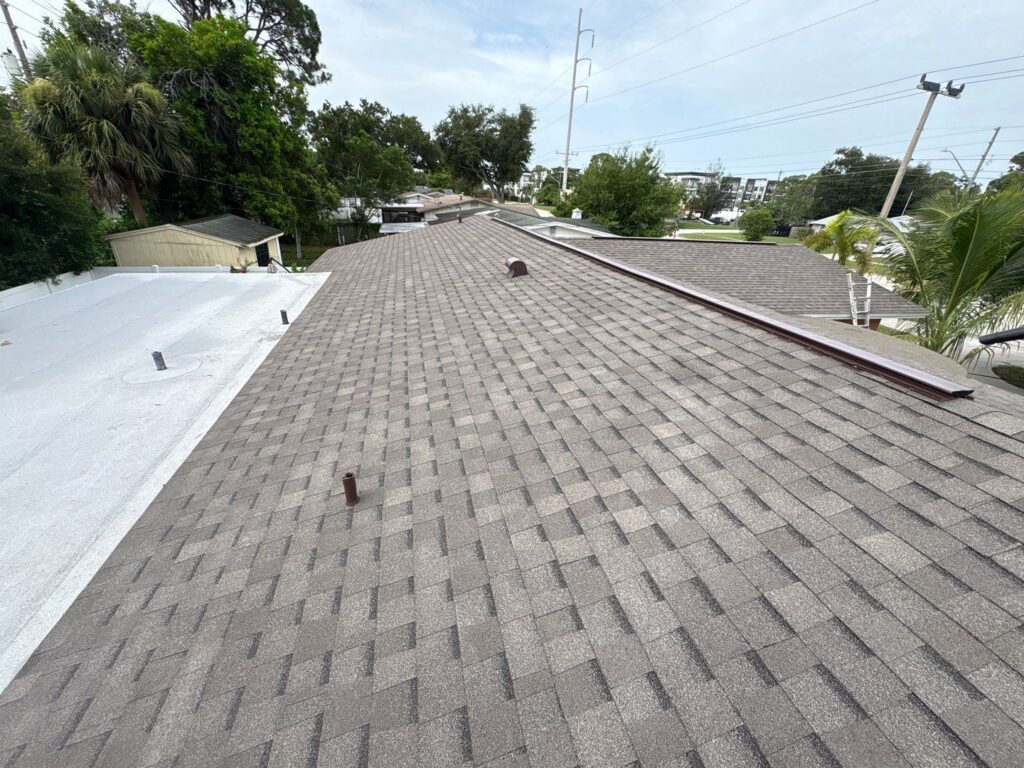
Florida carriers are required to offer premium credits for construction features that make a home more resistant to hurricane damage. The way you prove you have those features is a wind mitigation inspection, documented on a standard state form.
Plenty of Florida homeowners have never had one done, and are paying for features their house already has.
What’s actually on the form
The inspection uses the Florida Office of Insurance Regulation’s Uniform Mitigation Verification Inspection Form, OIR-B1-1802. It’s the same form statewide regardless of who performs the inspection, and it covers seven categories:
- Building code — whether the structure was built to the Florida Building Code, and which edition.
- Roof covering — the roof material and whether it meets current product approval standards, verified by permit date, product approval, or year of installation.
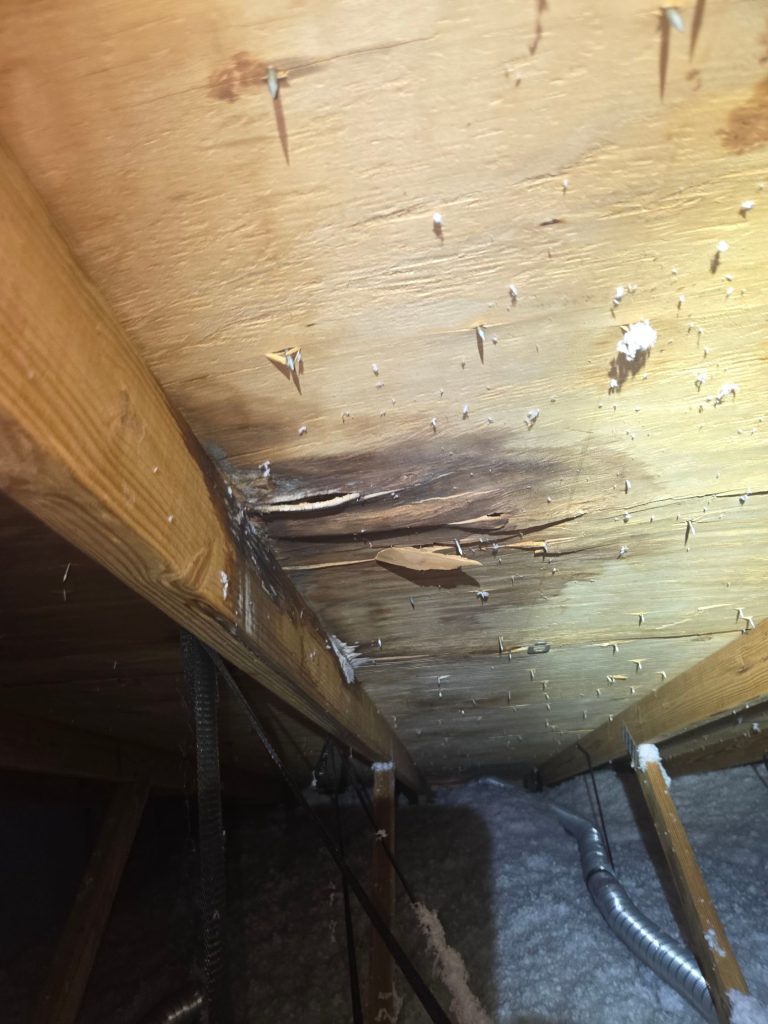
- Roof deck attachment — how the plywood or OSB sheathing is fastened to the trusses. The form records the weakest attachment found, so one under-nailed section sets your rating.
- Roof-to-wall attachment — how the roof structure ties into the walls: toe nails, clips, single wraps, double wraps, or structural anchors. Again, the weakest connection governs.
- Roof geometry — hip roofs shed wind better than gable or flat configurations and are credited accordingly.
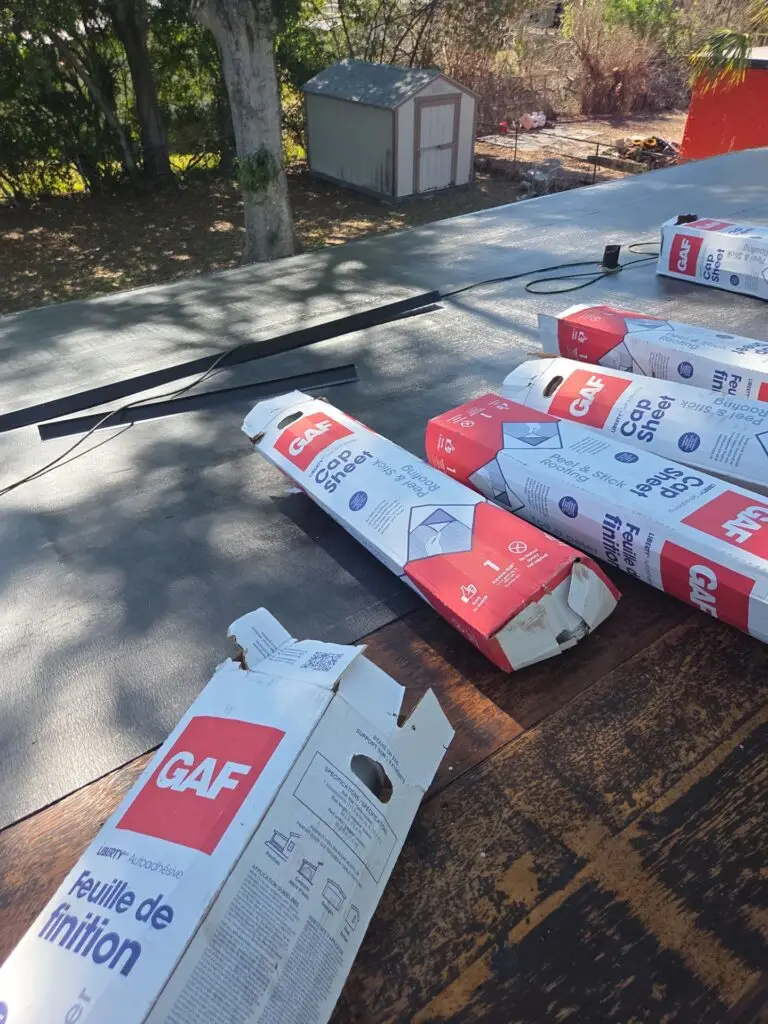
- Secondary water resistance — whether a self-adhering polymer underlayment is sealing the deck beneath the roof covering, so the house doesn’t take on water if the covering blows off.
- Opening protection — impact-rated or shuttered windows, doors, skylights, and garage doors.
Which of these are roofing work
Five of the seven are directly about the roof. That’s why this matters when you’re already planning roof work — several of these credits are far cheaper to earn during a replacement than as a standalone project later.
- Roof deck attachment — during a tear-off, the deck is exposed. Re-nailing to a better fastening schedule is inexpensive at that moment and effectively impossible afterward without tearing off again.
- Secondary water resistance — this goes on with the underlayment. Adding it during a replacement is a modest upgrade; retrofitting it later means removing the roof.
- Roof-to-wall attachment — sometimes improvable, sometimes not, depending on how the house is built and how accessible the connections are.
- Roof covering — a replacement with current product-approved materials updates this category by default.
- Roof geometry — fixed by the shape of your house. Nothing to do here but get credit if you have it.
If you’re getting a roof replaced anyway, this is the conversation to have before the work starts, not after.
An honest word about savings
- You will find websites promising specific percentages. Be skeptical of anyone who quotes you a number before seeing your house.
- Actual savings depend on your carrier, your policy, your county’s wind exposure, your home’s construction, and which credits you qualify for. The range across Florida homes is genuinely wide.
- Your insurance agent can tell you what the credits are worth on your policy. That’s a free phone call and a better source than any roofer, including us.
- It is also possible for an inspection to find fewer qualifying features than you hoped. That’s a real outcome and worth knowing before you pay for one.
How to get one
- Ask your insurance agent whether you already have one on file. They’re typically valid for five years, and you may have had one at purchase without registering what it was.
- Hire a qualified inspector. Florida specifies who may complete the form — generally licensed contractors, professional engineers, architects, or authorized home inspectors.
- Submit the completed form to your carrier and ask them to re-rate the policy.
- If you’re planning roof work, sequence it correctly. Decide which credits you’re pursuing before the tear-off, then inspect after completion so the new work is captured.
Where we fit
We hold Florida roofing license CCC1330676 and residential contractor license CRC1331169, both statewide. When we quote a roof replacement anywhere in the greater Tampa Bay area, we’ll walk you through which wind mitigation credits your project could pick up and roughly what the upgrades add to the job.
Then take that to your agent and find out what it’s worth on your policy before you decide. Some of these upgrades pay for themselves; some don’t. You should know which is which before you commit, not after.
Talk through wind mitigation on your roof project
This page is general information about Florida law and insurance practice, not legal or insurance advice. Statutes change — Florida’s property insurance law has been amended repeatedly since 2021 — and every policy is different. Read your own policy and confirm current law before acting. If money is on the line, talk to an attorney or a licensed public adjuster.
Sources: Florida OIR — Uniform Mitigation Verification Inspection Form OIR-B1-1802