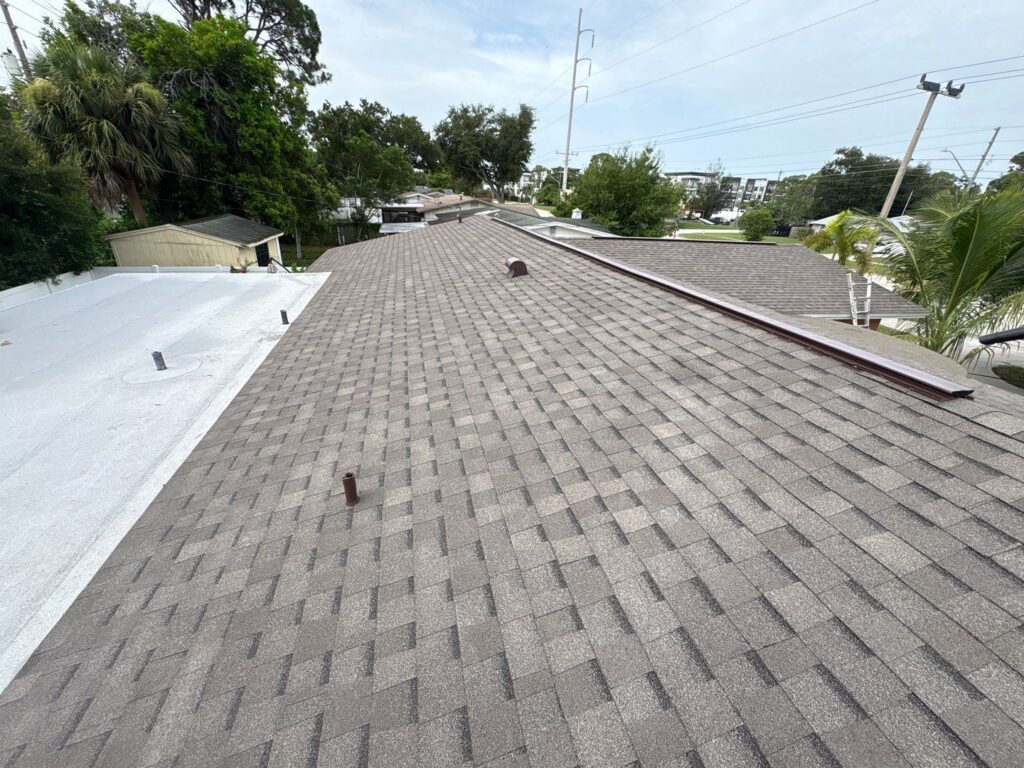
If you’ve gotten a roofing quote in Florida, you’ve probably heard some version of this: “More than 25% of your roof is damaged, so by code we have to replace the whole thing.”
For a lot of Florida homes, that is no longer true — and it hasn’t been since 2022. Depending on when your roof was built, you may be entitled to repair just the damaged section. That’s frequently the difference between a few thousand dollars and a few tens of thousands.
What the rule used to be
The old version was straightforward and expensive. If more than 25 percent of a roof section needed repair or replacement within any 12-month period, the entire roofing system had to be brought up to current code — meaning a full replacement, even when three quarters of the roof was perfectly sound.
What changed
Senate Bill 4-D, effective May 2022, created an exemption. Florida Statute §553.884 now provides that where a roof was built, repaired, or replaced in compliance with the 2007 Florida Building Code or later, only the portion actually being worked on has to meet current code. The rest of the roof can stay.
In practical terms, that generally means roofs constructed after the 2007 code took effect — around March 2009 — are strong candidates for a targeted repair rather than a tear-off.
Given how much of Florida was built after 2009, this covers an enormous number of homes. If your house went up during the post-2009 growth, this likely applies to you.
When replacement genuinely is the right call
- The roof predates the 2007 code and the 25% threshold is crossed.
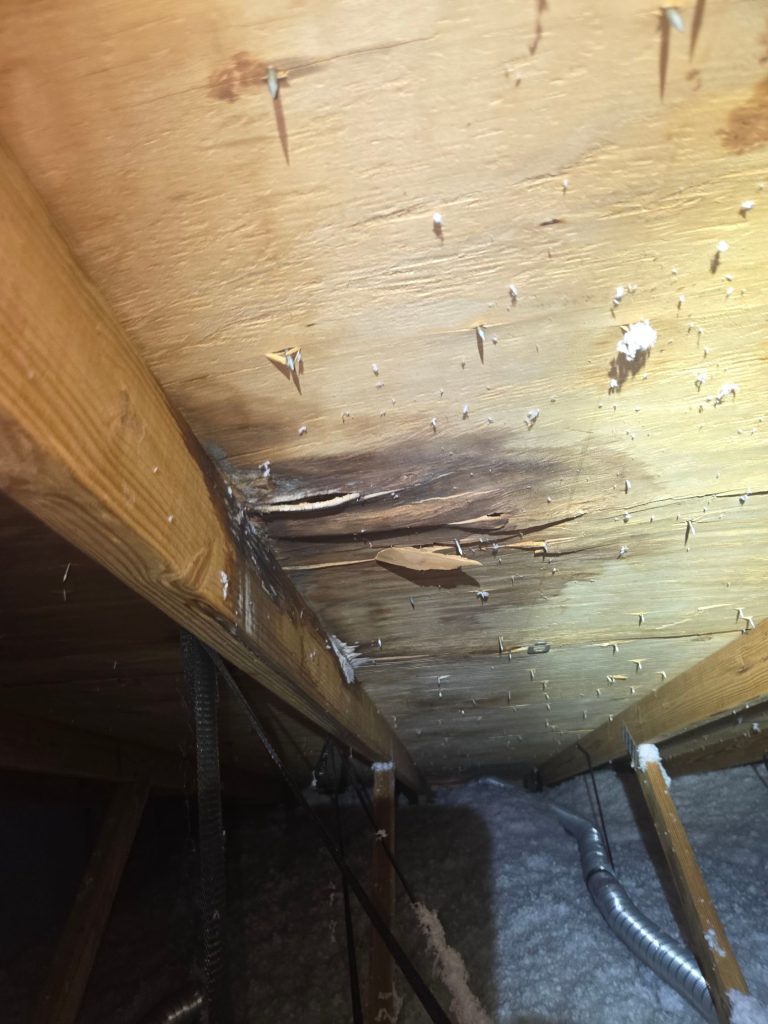
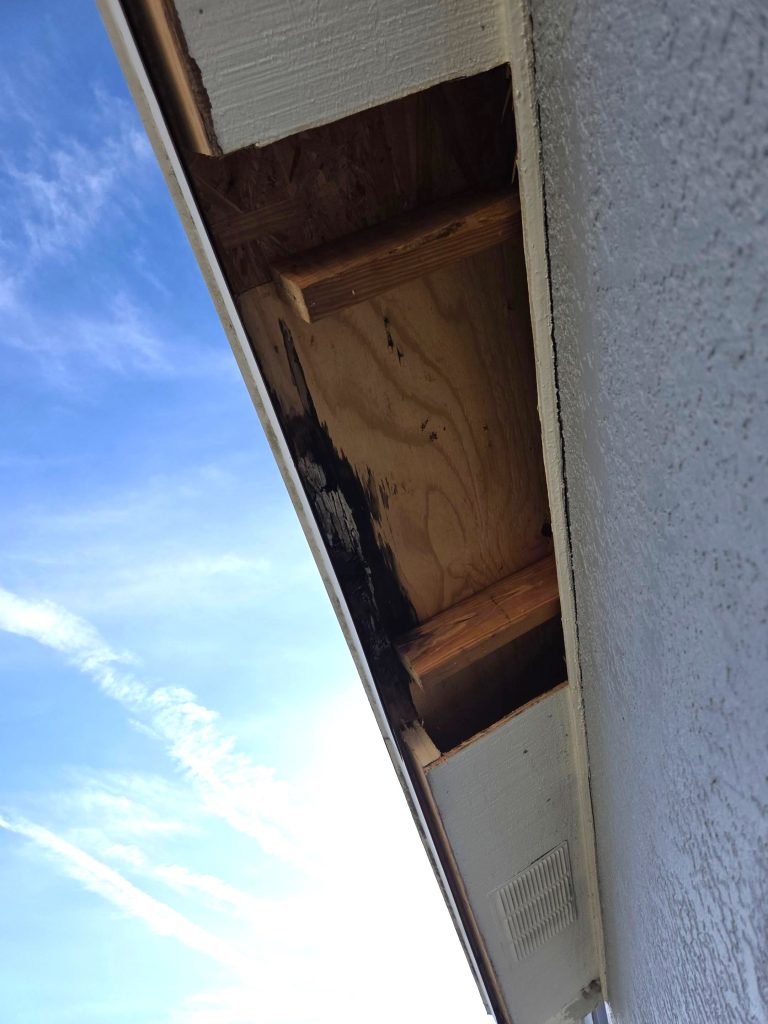
- The decking underneath is compromised. If the sheathing is rotted or delaminated across a wide area, patching the surface is throwing money away.
- The roof is simply at the end of its service life. Repairing a 24-year-old roof buys you a season, not a decade.
- Damage is spread across multiple slopes rather than concentrated in one area.
- You can’t match the existing material closely enough for a repair to be watertight and reasonable in appearance.
A roofer telling you the whole roof needs to go is not automatically wrong. But they should be able to explain which of the reasons above applies to your specific house, and show you.
How to find out which category your roof is in
- Find out when the roof was last fully replaced. Not when the house was built — when 100 percent of the roof surface was last done. These are often different dates.
- Check your county permit records. Most Florida counties have searchable online permit history. A roofing permit tells you the date and usually the code edition in force.
- Look at your closing documents or four-point inspection if you bought the house recently. Roof age is almost always in there.
- Get an assessment that separates damage from age. The question isn’t just “is there damage” — it’s how much, where, and whether the structure underneath is sound.
Why you’re hearing about this from us
Plainly: most of our industry does better when you believe you need a full replacement. A repair is a smaller job.
We’d rather tell you the truth and do the repair. Homeowners talk to each other, and a roofer who talked you out of an unnecessary twenty-thousand-dollar job is a roofer you tell your neighbors about. That math works out for us over time, and it means you can trust what we tell you when we do say the roof has to go.
Get an honest repair-or-replace assessment
This page is general information about Florida law and insurance practice, not legal or insurance advice. Statutes change — Florida’s property insurance law has been amended repeatedly since 2021 — and every policy is different. Read your own policy and confirm current law before acting. If money is on the line, talk to an attorney or a licensed public adjuster.