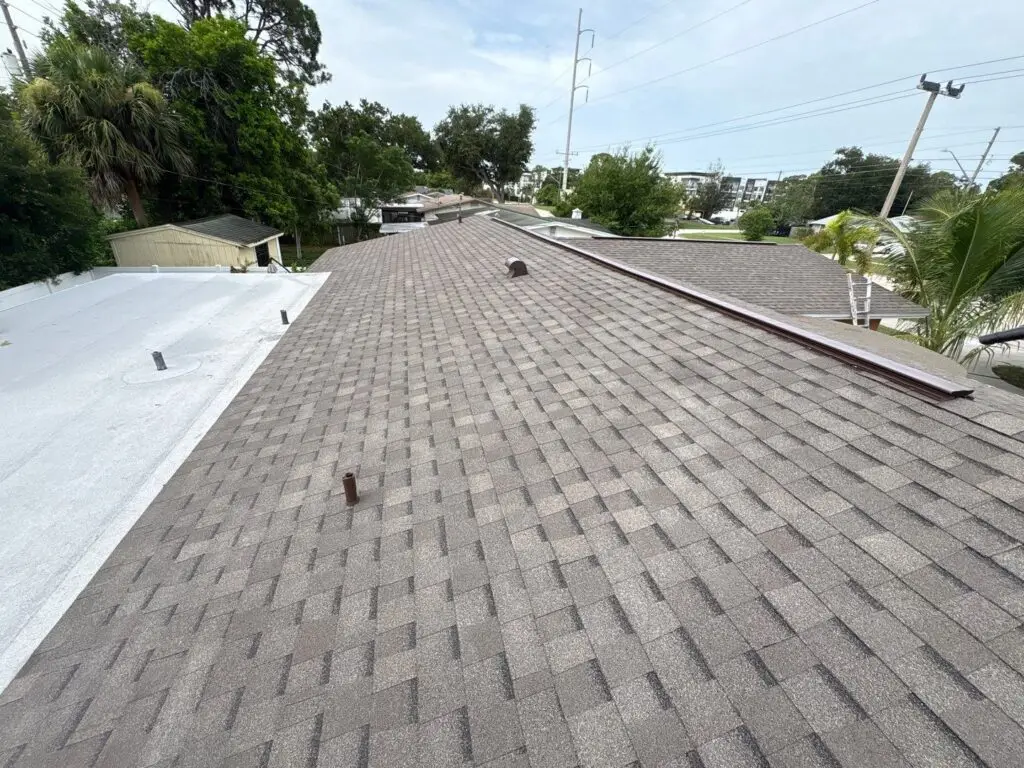
Last July 30, afternoon storms brought heavier, more sustained rainfall than a typical summer thunderstorm across the Brandon and Valrico area. We felt it directly: our team fielded roughly a dozen calls about roof leaks within hours of the storm passing — a noticeably higher volume than what a standard Florida summer storm usually generates.
That’s worth paying attention to, even without a hailstorm or major wind event behind it. Heavy, sustained rain doesn’t create new roof damage so much as it finds damage that was already there.
Why Heavy Rain Exposes Leaks That A Normal Storm Doesn’t
A roof can handle a quick, hard downpour without a problem, but longer, heavier rain changes the equation:
- Water has more time to find weak points — a small gap in flashing, a cracked pipe boot, or worn sealant around a vent that sheds a short shower just fine can let water in once rain sits and pools for an extended period.
- Saturated ground and clogged gutters back water up toward the roofline instead of away from it, which is often when a marginal roof starts leaking for the first time.
- Older or aging roofs are disproportionately affected. A roof nearing the end of its service life may show no visible signs of trouble day to day, then leak the first time it sees genuinely heavy, prolonged rain.
If your roof started leaking last July 30 for the first time, it’s very likely something was already weakened — the storm just revealed it.
Where Rain-Related Roof Leaks Often Begin
The spot where water appears inside your home is not always where it entered the roofing system. Rain can travel along roof decking, rafters, insulation, pipes, and other building materials before it reaches a ceiling or wall.
Some of the most common areas our roofing team checks after sustained rainfall include:
- Roof flashing around chimneys, walls, and valleys. Flashing directs water away from joints and transitions. If it becomes loose, corroded, improperly sealed, or damaged, rain may work underneath the roofing materials.
- Pipe boots and roof vents. Rubber pipe boots can crack as they age under Florida’s intense sun. Sealants around vents can also shrink or separate over time.
- Roof valleys. Valleys carry a large amount of runoff during heavy rain. Debris, damaged shingles, or installation problems can prevent water from draining correctly.
- Missing, lifted, or deteriorated shingles. A shingle does not have to be completely gone to create a vulnerable area. Small cracks, loose edges, and worn surfaces can allow wind-driven rain to reach the underlayment.
- Low-slope roof sections and roof-to-wall connections. Water drains more slowly in these areas, giving it more time to find gaps in flashing, sealants, or roofing materials.
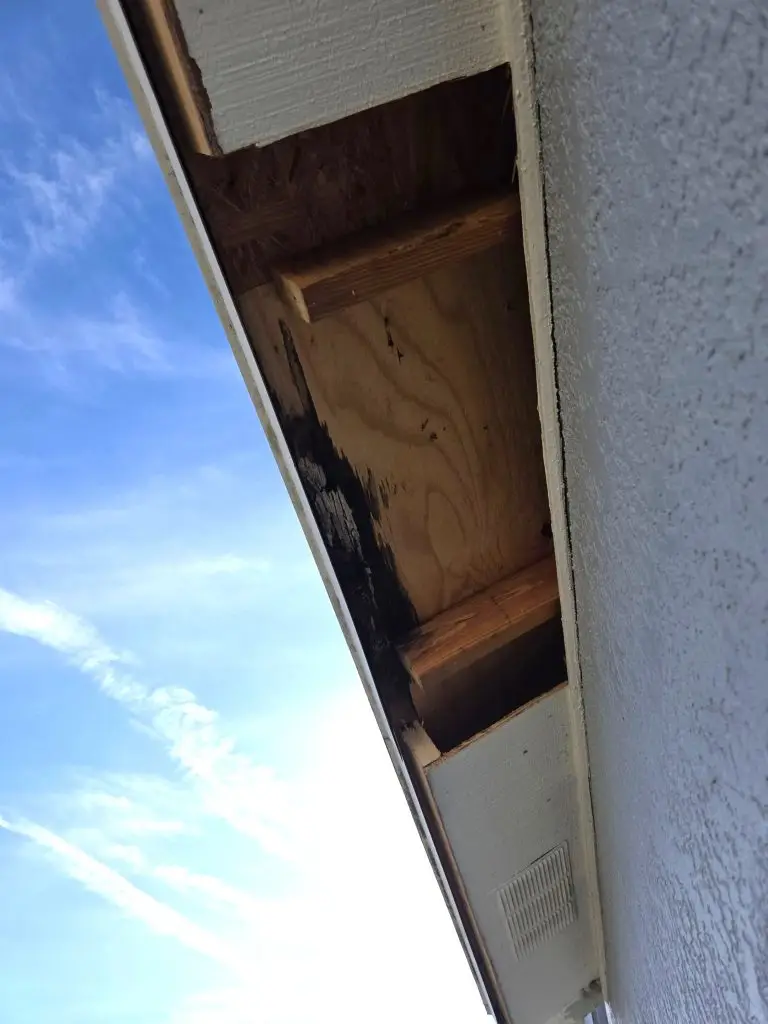
- Gutters and roof edges. Clogged or damaged gutters may allow water to overflow near the fascia, soffit, and lower edge of the roof.
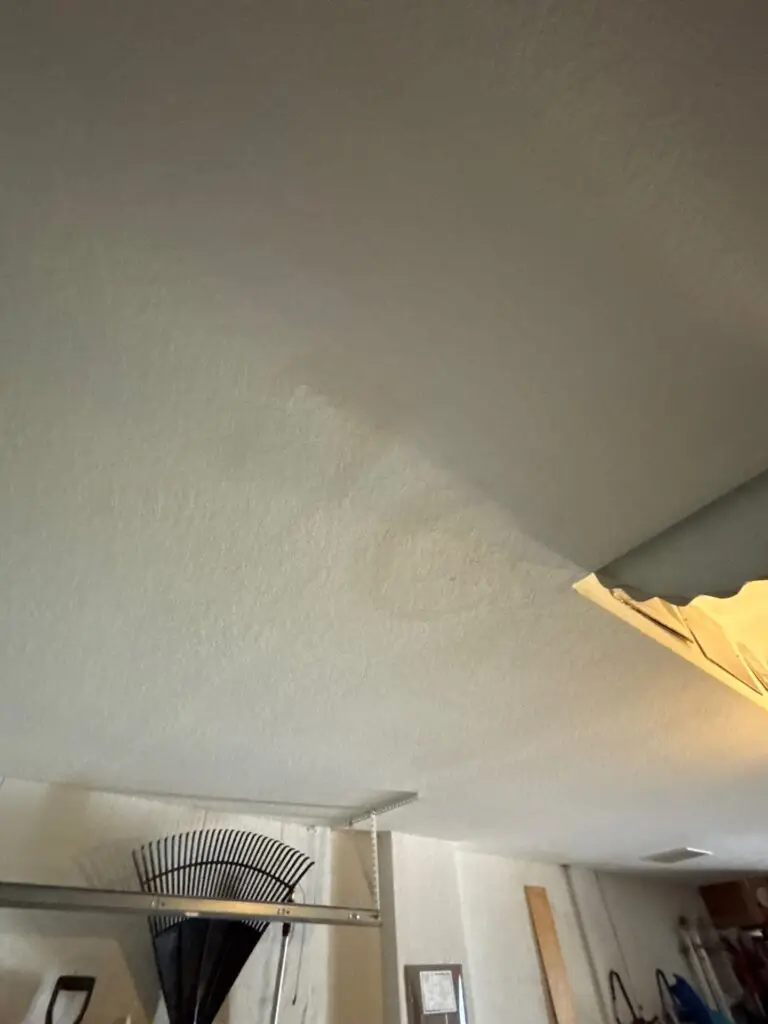
Why The Ceiling Stain May Not Be Directly Below The Leak
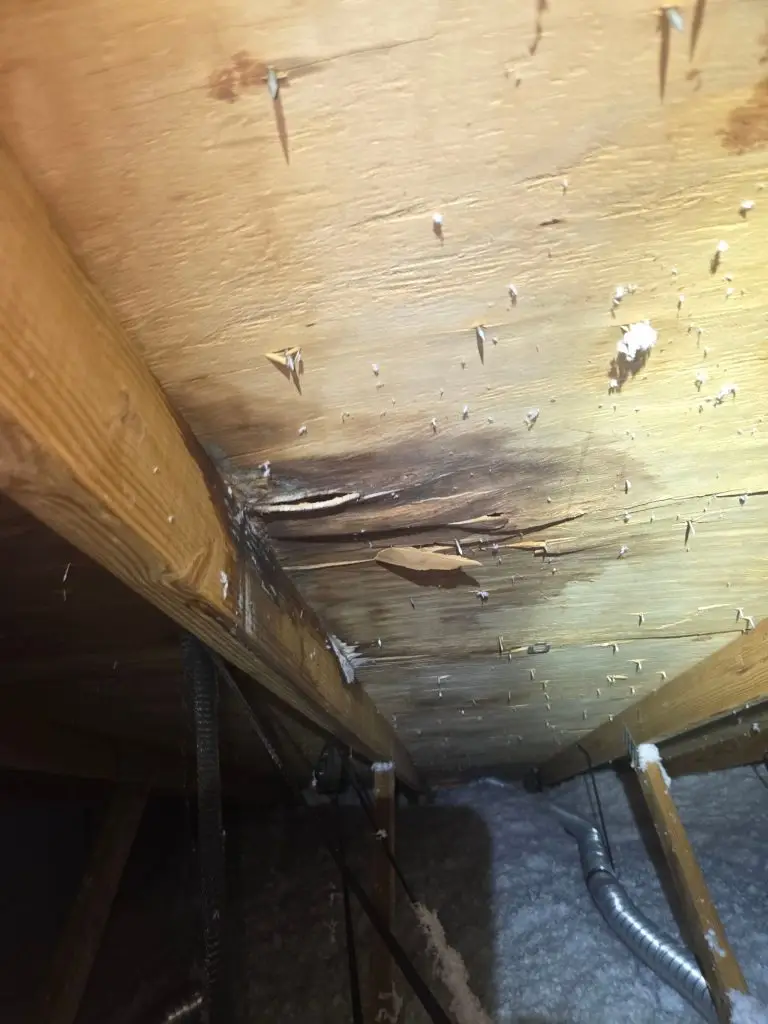
Water follows the easiest available path. It may enter through a damaged area several feet away, move along the underside of the roof deck, and then drip onto insulation or drywall.
This is one reason simply patching the ceiling stain does not solve the underlying issue. The damaged interior area may need attention, but the source of the water must also be found and repaired.
You may also notice different warning signs in separate parts of the home, including:
- Discoloration around ceiling fixtures
- Damp insulation in the attic
- Peeling paint near exterior walls
- Musty odors after rain
- Soft or bubbling drywall
- Darkened wood around rafters or roof decking
What To Do If You Noticed A Leak (Or You’re Not Sure Yet)
- Check attic and ceiling areas for water stains, even small ones — a faint yellow-brown ring is often the first visible sign, well before an active drip.
- Look at gutters and downspouts for debris buildup that could be pushing water back toward the roofline instead of away from the house.
- Don’t wait for a bigger storm to find out if the problem is real. A leak that shows up once during heavy rain will very likely show up again — usually at a less convenient time.
What A Professional Roof Inspection Should Examine
A proper inspection should look beyond the visible stain or suspected leak location. The goal is to understand how water entered, how far it traveled, and which roofing components may have been affected.
Depending on the property and the location of the leak, an inspection may include:
- Shingles or other roofing materials
- Flashing around walls, chimneys, vents, and valleys
- Pipe boots and roof penetrations
- Gutters, downspouts, fascia, and soffits
- Roof decking and underlayment
- Attic insulation and ventilation
- Signs of moisture, wood deterioration, or previous repairs
- Drainage patterns on low-slope sections
We’re Ready To Help
Certified Roofers and General Contractors Inc. has served Brandon, Valrico, and the greater Tampa Bay area for over 45 years as a family-owned, GAF Master Elite certified roofing and general contracting company (License #CCC1330676, #CRC1331169). Given the volume of leak calls we received following the July 30 rain, if your roof let water in — or you’re just not sure — we’d rather take a look now than have you find out the hard way during the next storm.
Free Roof Inspections ! Call now to schedule (813) 643-8333.
This post reflects call volume observed by our team and general roofing guidance, not a confirmed weather damage report for any specific property.