
How to Bid an Association Roof Replacement
Three bids you can't compare aren't three bids — they're three guesses. This is what to put in the request, what every proposal has to contain before it's worth reading, and how to score them in a way that holds up when an owner asks why you didn't take the cheapest one.
The problem with most association roofing bids isn't the contractors — it's that each one was allowed to invent its own scope. When three companies each decide what's included, the low bid usually wins by leaving things out, and the board finds out during tear-off. The fix is to write the scope yourself before you request anything: specify the system, the underlayment, the deck repair allowance, the accessories, the phasing and the documentation you require, then ask every bidder to price that. You'll get proposals that differ only by price and company — which is the only way a board can defend the decision it makes.
On this page
We bid association work constantly, which means we also lose it constantly — sometimes to a better company, sometimes to a number that was never real. This guide is written from that side of the table. It will make it harder for a contractor to win your project on an incomplete scope, and we are fine with that, because the projects we lose that way tend to come back as repair calls two years later.
Why association bids come back incomparable
A board sends the same email to three roofers: "We need a price to replace the roofs on buildings 1 through 6." Three weeks later, three numbers arrive — say $310,000, $368,000 and $421,000 — and the board has no way to know whether that spread reflects quality, scope, or optimism.
Almost always, it reflects scope. Here is where the difference typically hides:
- Deck repair. Nobody knows the condition of the plywood until the old roof is off. A bidder can assume zero rotten sheathing and produce a much lower number, then bill the real amount as a change order.
- Code-required upgrades. A Florida re-roof triggers requirements the old roof may not have met. A bid that ignores them isn't cheaper — it's incomplete, and the difference appears at inspection.
- Accessory and system level. "GAF shingles" is not a scope. The underlayment, starter, ridge, ventilation and fastening pattern determine both the cost and which warranty the manufacturer will issue.
- Phasing and price protection. If the work spans budget years, does the price hold? A bid that's silent on this is a bid that will be re-priced.
- Occupied-property logistics. Resident notice, parking coordination, daily cleanup and protection cost real money. A bidder who hasn't planned for them hasn't priced them.
None of that is dishonest, exactly. It's the predictable result of asking three companies an open question. The board's job is to stop asking an open question.
What to put in your request
You do not need an engineer to write a usable roofing RFP. You need six things stated clearly enough that every bidder is pricing the same job.
The buildings, precisely
Address, building numbers, approximate roof area if known, number of stories, and roof type per building. Attach a site plan if you have one. If you're phasing, say which buildings are in which phase.
The system you want priced
Name the material class and, if you have a preference, the product line. If you don't know, ask each bidder to price one specified system so the numbers are comparable, plus their recommended alternate as a separate line. Never let the base bid float.
A stated deck repair allowance
Require every bidder to include an identical allowance — say, a set number of sheets of replacement sheathing — and to state their per-sheet rate beyond it. Now deck condition is a known variable instead of a hidden one.
The documentation you require
Florida license numbers, certificate of general liability and workers' compensation naming the association as certificate holder, manufacturer certification level, permit responsibility, and the warranty they will actually issue on your buildings.
The logistics you require
Working hours, staging and dumpster locations, resident notice lead time, daily cleanup expectations, protection of vehicles and landscaping, and a named site contact reachable during work hours.
The schedule and price validity
Desired start window, expected duration per building, and how long the quoted price is held. If the project crosses budget years, ask explicitly whether pricing is firm across phases.
Send that to four or five contractors. The ones who respond with a matching, line-by-line proposal are the ones worth meeting. The ones who send back a single number and a brochure have told you something useful.
What every proposal must contain
Set this as the minimum for a bid to be considered. Publishing the standard in the request is what makes it enforceable later.
- A written scope of work — tear-off, deck inspection and repair terms, underlayment, starter, field product by name and line, ridge, ventilation, flashing and penetrations, drip edge, and disposal.
- The fastening schedule — nails per shingle and pattern. It's the single biggest determinant of wind performance and it costs almost nothing to state.
- Deck repair terms — the included allowance and the unit rate beyond it, in writing.
- Permit responsibility — who pulls it, whose license, and whether the fee is included or passed through.
- Manufacturer certification and the specific warranty offered — not the list of warranties the manufacturer publishes, but the one this contractor can issue on your building at this system level.
- Workmanship warranty — length and what it actually covers, separate from the manufacturer warranty.
- Insurance certificates — general liability and workers' compensation, current, with the association named as certificate holder.
- Payment schedule — deposit, progress payments tied to milestones, and retainage. Be wary of large deposits before materials are on site.
- Schedule — mobilization date, duration per building, and phasing sequence.
- Occupied-property plan — resident notice, hours, cleanup, protection, and the site contact.
A contractor who can produce all ten for an association project is a contractor who has done association projects. That's most of what you're actually screening for.
Red flags that should end the conversation
Some of these are judgment calls. One of them is a felony.
In Florida it is insurance fraud, a third-degree felony, for a contractor to knowingly or willfully pay, waive or rebate all or part of an insurance deductible. The statute also prohibits offering a rebate, gift, gift card, cash, coupon or "any other thing of value" in exchange for a roof inspection or making an insurance claim, with fines up to $10,000 per violation.
If a contractor bidding your project offers to "take care of" or "cover" the association's deductible on a claim, that is not a favor and it is not a negotiating tactic. Remove them from consideration and document why in your minutes.
- A number with no scope. If they won't put the system and the fastening schedule in writing before contract, they won't be bound by it after.
- No deck repair allowance. Either they haven't thought about it or they're planning to bill it later. Neither is good.
- Pressure on the meeting calendar. "This price is good until Friday" is a retail tactic. A board that has to decide before it can deliberate is being managed.
- A large deposit before materials. Deposits are normal. A deposit that funds the contractor's other jobs is not.
- Certification claims that don't verify. Manufacturer certification levels are checkable on the manufacturer's own site. Check them.
- A license that doesn't match the company. Verify the license number against the business name in the state's licensing records — not the letterhead.
- No physical inspection before bidding. A contractor who priced your roofs from satellite imagery has priced a guess.
- Reluctance to name the association as certificate holder. This is routine. Hesitation is informative.
Scoring bids without defaulting to price
Boards default to the low bid because price is the only variable everyone can see. Once the scope is fixed, the other variables become visible too — and a simple scoring sheet turns a contentious meeting into an arithmetic exercise.
| Criterion | Weight | What you're actually measuring |
|---|---|---|
| Price | 30% | Total cost against the fixed scope — not against three different scopes |
| Scope completeness | 20% | How many of the ten required items are present, specific and unqualified |
| Warranty offered | 15% | The specific manufacturer system warranty this contractor can issue, plus workmanship terms |
| Relevant experience | 15% | Association and occupied-building projects, with references you actually call |
| Logistics plan | 10% | Resident communication, phasing, cleanup, protection, site contact |
| Financial stability | 10% | Years in business, license history, insurance limits, payment terms that don't front-load risk |
Two notes on using it. First, call the references — specifically other associations, and ask the manager rather than the board president, because the manager fielded the complaint calls. Second, weight "years in business" seriously in Florida right now. Several roofing companies operating in this market have closed in recent years, and a workmanship warranty is only as good as the company standing behind it.
Documenting the decision
The board's exposure on a roof project isn't usually the roof. It's the owner who asks, eighteen months later, why the association paid $58,000 more than the lowest bid. A short paper trail answers that permanently:
- The written scope that every bidder received, kept in the association records.
- All proposals received, including the ones you rejected and the reason.
- The completed scoring sheet.
- Minutes reflecting the discussion and the vote, with the rationale stated — "selected on scope completeness and warranty, not lowest price" is a sentence worth having on the record.
- Insurance certificates and license verification printouts as of the date of award.
Boards that keep this find the questions stop. Boards that don't find that the cheapest bid becomes the standard they're measured against forever.
This page is general guidance, not legal advice. We're roofing contractors, not attorneys. Your association's governing documents may impose bidding, notice or approval requirements beyond anything described here — Florida law also requires owner approval for certain material alterations to common elements, which can be relevant if a roof replacement changes the type or appearance of the existing roof. Confirm your association's obligations with its attorney before you issue a request or award a contract.
Frequently asked questions
How many roofing bids should an HOA or condo association get?
Three is the common practice and is often enough, provided all three are pricing an identical written scope. Bids against three different self-authored scopes are not comparable no matter how many you collect. Check your governing documents first — some associations require a specific number of bids above a dollar threshold, and some require member approval above certain amounts.
Does a roof replacement count as a material alteration requiring owner approval?
It can. Under Florida Statutes § 718.113, material alterations or substantial additions to the common elements generally require approval of 75 percent of voting interests unless the declaration provides otherwise. Replacing a roof with like kind and quality is normally maintenance rather than alteration, but changing the roof type, profile or color may be treated differently. Ask your association's attorney before you specify a change in appearance.
Can a roofing contractor pay our association's insurance deductible?
No. Under Florida Statutes § 489.147, it is insurance fraud — a third-degree felony — for a contractor to knowingly or willfully pay, waive or rebate all or part of an insurance deductible. The statute also prohibits offering rebates, gifts, gift cards, cash or other things of value in exchange for a roof inspection or an insurance claim, with fines up to $10,000 per violation. A contractor who offers this should be removed from consideration.
What should be in a roofing bid for a condo or HOA?
At minimum: a written scope of work naming the specific system and underlayment, the fastening schedule, deck repair allowance and unit rate, permit responsibility, the specific manufacturer warranty the contractor can issue, workmanship warranty terms, current general liability and workers' compensation certificates naming the association as certificate holder, payment schedule, project schedule and phasing, and an occupied-property logistics plan.
Should the association or the contractor pull the permit?
The licensed contractor performing the work should pull the permit under their own license. If a contractor asks the association or an owner to pull the permit, treat it as a significant warning sign — it shifts liability onto the association and can indicate a licensing problem. Make permit responsibility explicit in your request.
How do we verify a Florida roofing contractor's license?
Check the license number against the company name in the Florida Department of Business and Professional Regulation's public license search, and confirm the license is active and covers roofing. Verify the certificate of insurance directly with the insurance agent listed rather than relying on the copy provided. Confirm manufacturer certification levels on the manufacturer's own contractor locator.
Can a roof replacement be phased across budget years?
Yes, and on multi-building properties it is frequently the better plan. Phasing spreads cost across budget years, keeps reserve contributions manageable and reduces resident disruption. Require bidders to state whether pricing is held across phases, and sequence buildings by condition so the worst roofs go first.
Need a scope your board can bid against?
We'll inspect your buildings and provide a written, itemized scope of work at no cost — one you can send to other contractors so every proposal you receive is priced against the same job. We'd like to win the work, but a board that can compare bids properly is better for everyone on this list.
- 45+ years in Tampa Bay
- GAF Master Elite®
- Association & occupied-building experience
- Licensed CRC1331169 & CCC1330676
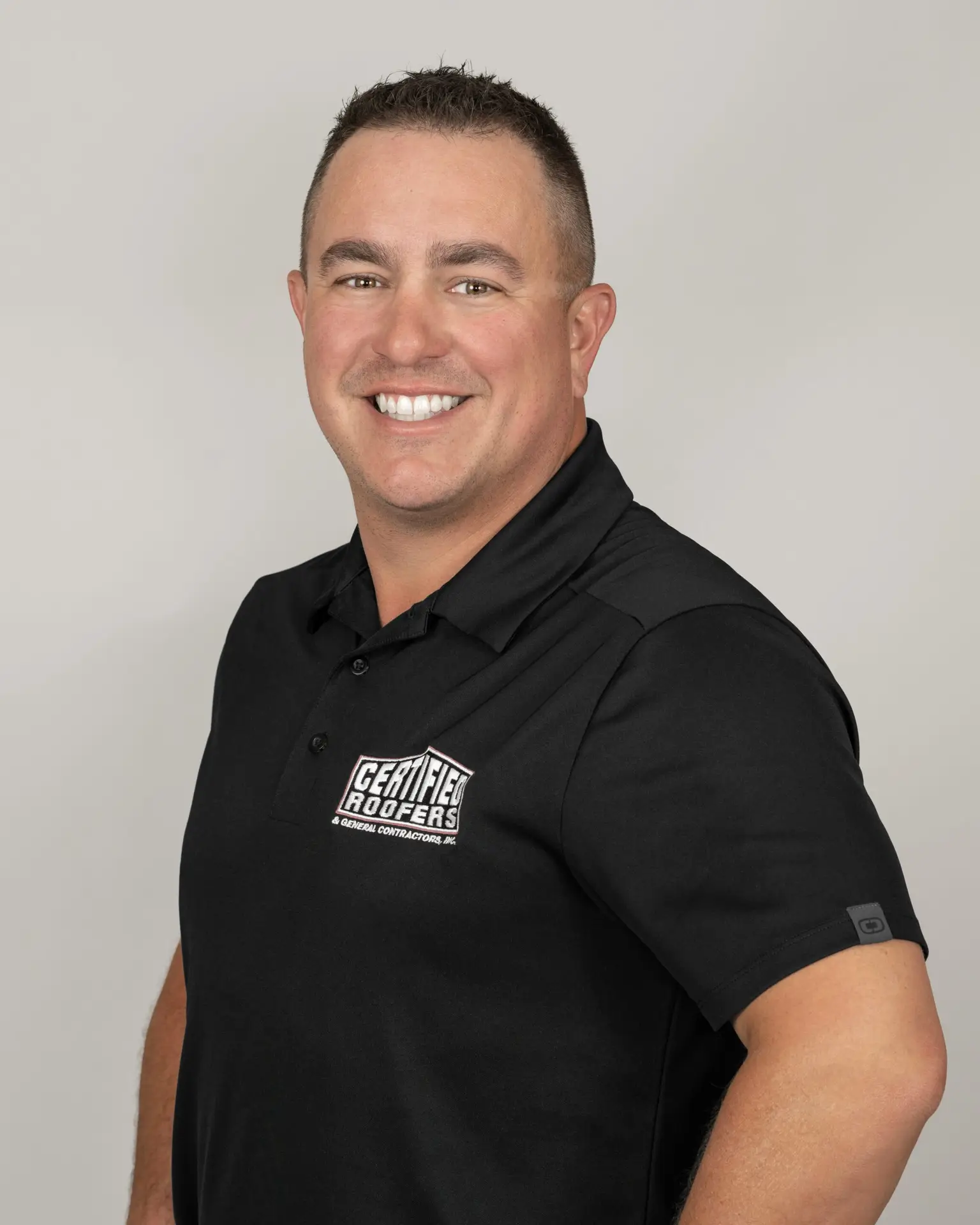
Alex Sanchez
President, Certified Roofers & General Contractors, Inc. — a family-run, GAF Master Elite® roofing contractor serving Hillsborough, Pinellas, Pasco, Polk, Manatee and Sarasota counties for more than 45 years, including condominium, cooperative and apartment communities. Licensed CRC1331169 & CCC1330676.
Related: Multi-Family & Association Roofing · Roofs & Florida's Reserve Study Law · Who Pays for the Roof · GAF Warranty Protection